Jun 05,
2024 •
10 minutes read
Open banking’s green road towards a sustainable future

Just a few years ago, companies could take a leap of faith by believing that their environmental impact was no such problem. Minimal commitment to addressing climate change made 2010–2020 the warmest decade recorded with a 1.5x increase in natural disasters. Therefore, businesses are aligning with global efforts to scoop out new environmentally safe solutions.
“The Decade of Action”, as the UN titles it, provides no room for doubts and careless actions. With the need to expand ecological practices more than ever, governments realise that the financial sector can be a leader in empowering positive changes. In fact, as a catalyst for innovations and green initiatives, fintech has been classified as one of the pivotal elements of the UN 2030 Agenda and Sustainable Development Goals (SDGs).
Since its inception in 2018, open banking has broken down the traditional barriers between banks and other financial institutions, revolutionising the financial landscape. The potential of open banking data is undeniable. A single transaction can provide valuable insights into behavioural patterns such as travel habits, energy consumption, preferred merchants, dining preferences, and leisure activities.
Open banking not only allows access to raw data through APIs but also processes, enhances, and transforms it into actionable insights through the power of data enrichment tools. Rooted in the belief that customers own their financial data and should be able to leverage it to their advantage, open banking opens the door to a vast array of financial products and services, from budget management and loans to insurance and even carbon footprint analysis.
In this article, we’ll delve into how open banking data both educates businesses and individuals on transaction CO2 impacts and helps them shift behaviours to minimise carbon footprints, shaping a new roadmap for green open banking initiatives and climate fintech startups.
Embracing “green” open banking
PSD2 regulations and open banking expansion encourage transparency, control over finances and competitiveness by mandating banks share data with third parties. These efforts promote innovations and economic progress, opening new investment opportunities like green technology or renewable energy while encouraging the financial sector to adopt ESG principles.
A recent survey by Economist Impact and Temenos found that 74% of the 300 banks surveyed are planning to invest more in sustainable projects in the next 5 years, while 73% will embrace ESG propositions by 2028.
As companies throughout the world attempt to diminish their environmental effect, sustainable open banking emerges as a powerful instrument for new solutions across several sectors. From transportation to energy and beyond, open banking promotes cooperation that reduces environmental impact while increasing efficiency and sustainability.
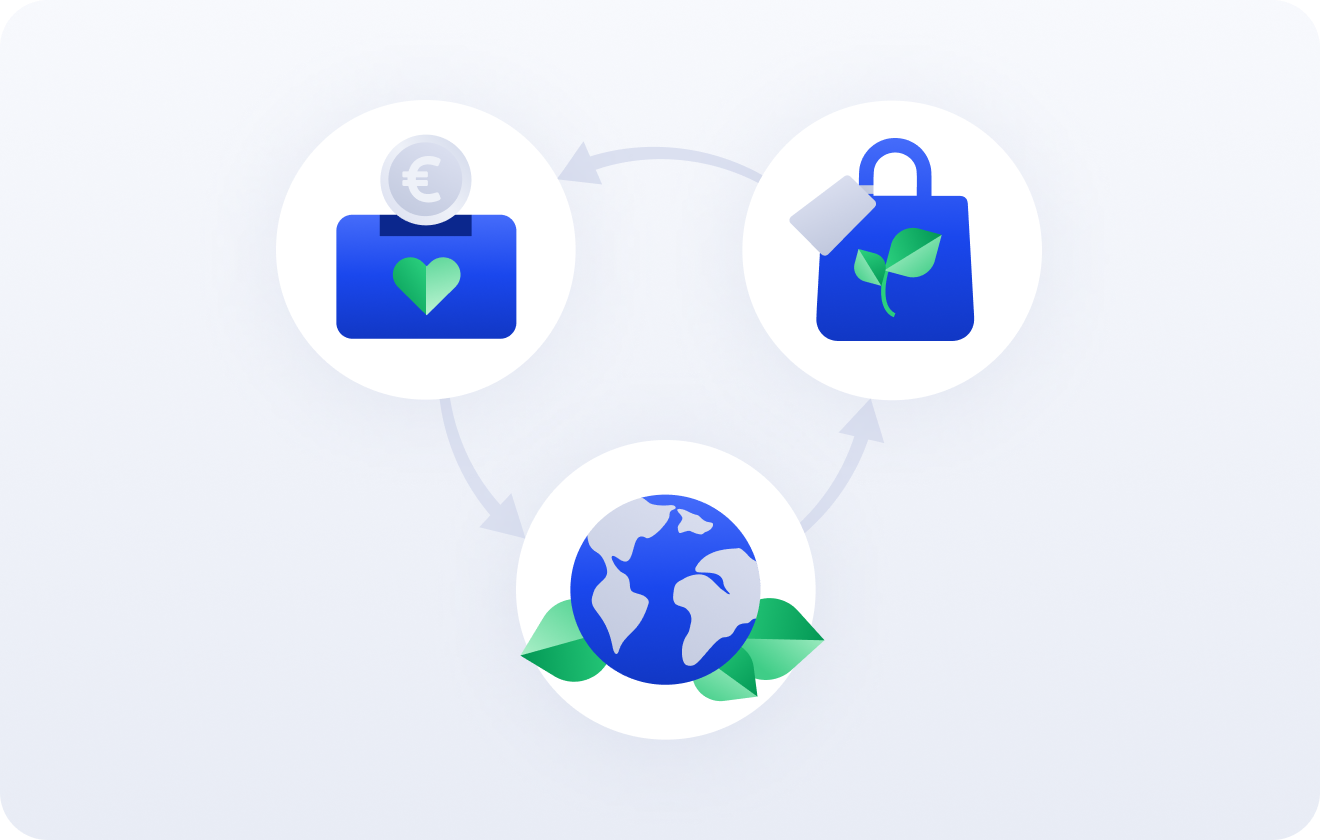
Let’s have a look at how open banking brings actual positive environmental impacts to some of the biggest industries by lowering CO2 emissions generated by their operations.
Travel industry
The World Resources Institute published a fresh report showing that travel and commercial industries are among the top 10 world CO2 emitters. Sustainable open banking technology plays a pivotal role in reducing the travel industry’s pollution impact. This can be achieved by allowing transportation services to connect directly to the user’s bank feed and use the account information to calculate the carbon emissions of travel purchases.
Transactional analysis and data aggregation can be used to determine the best transport options based on budget constraints or preferences, allowing travel companies to suggest personalised time- and money-efficient deals.
Based on the aggregated data, travellers obtain a clear overview of their environmental footprints from different travel choices, while transportation services can encourage conscious behaviour among customers. It is possible to achieve this by either rewarding customers for making eco-friendly choices, such as using online payments, or by providing options that automatically offset customers’s carbon emissions through supporting sustainable projects.
Find out more about how the travel industry can leverage open banking to overcome challenges.
E-commerce
Customers are now more aware of the impact of their day-to-day spending on the environment. With rising open banking technologies, consumers are more inclined to move their finances to sustainable banking institutions that provide tools for understanding their carbon footprint and helping offset their environmental impact.
E-commerce companies can reduce waste and overconsumption by utilising open banking data to predict consumer demand, ensuring only the necessary amounts are produced and distributed. This becomes possible by implementing data enrichment features that enable industry businesses to extract raw data from multiple sources and use machine learning algorithms to aggregate and categorise collected it into insightful reports, tracking spending habits and merchant preferences.
It facilitates businesses to boost consumer engagement, grow revenues, and acquire and retain customers. In consequence, users are determined to shop more responsibly based on the carbon score of their financial behaviour, and businesses can adjust their offers, not only making the shopping experience more pleasant but also encouraging sustainable shopping habits.
Climate fintech
Open banking enables fintech companies to offer digital tools and services useful for both companies and individuals to assess and minimise their carbon impact. It has the power to embed those innovations into a wide ecosystem of financial services, making the tools more accessible for both financial institutions and individuals.
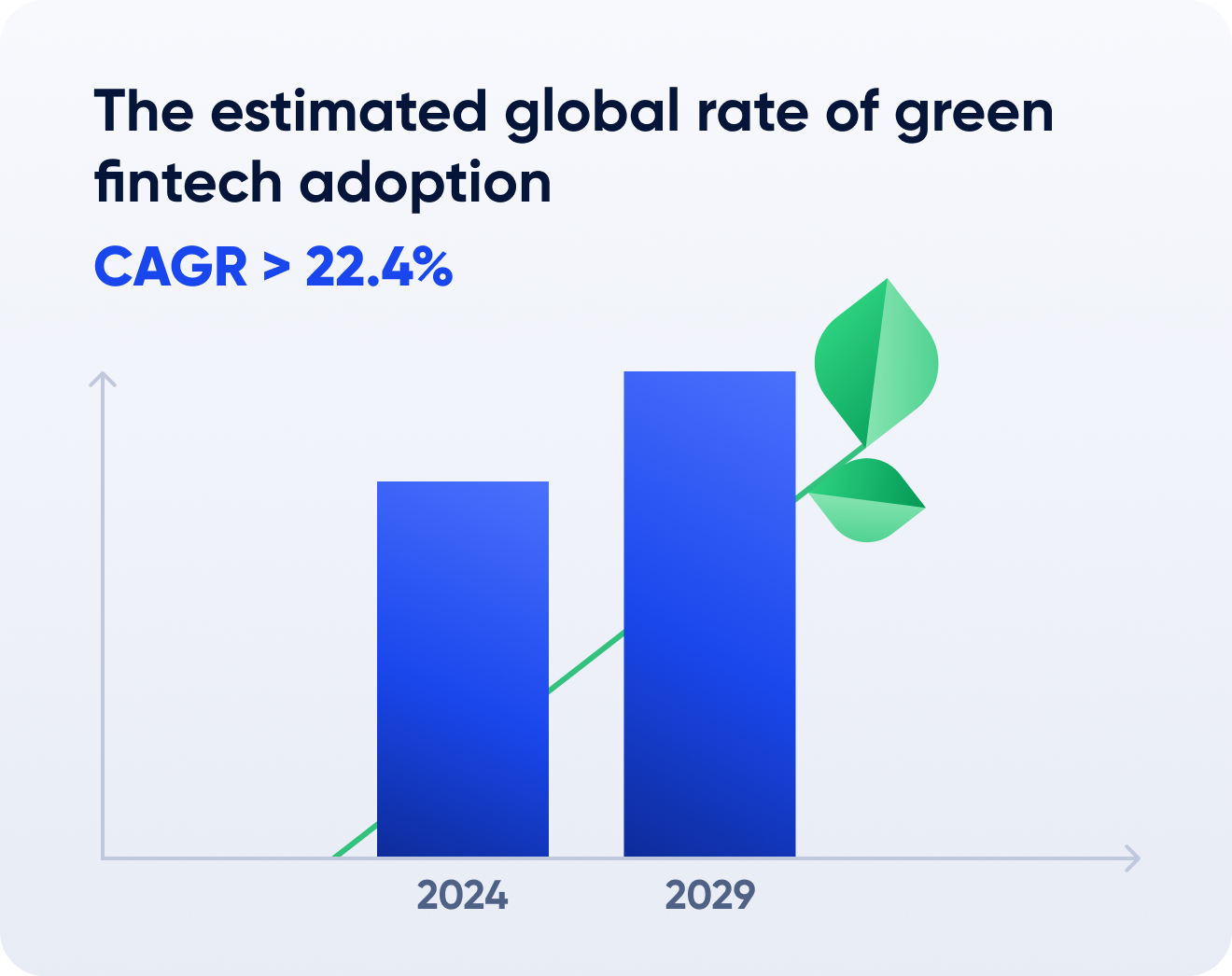
Latest Global Markets Estimates research predicts the green fintech industry to grow at a 22.4% annual rate between 2024 and 2029. Climate fintech’s main concern is to reduce carbon emissions by helping individuals and companies make more conscious financial decisions and track their carbon footprints.
Salt Edge & Plant-for-the-planet case study
Salt Edge is making conscious efforts by offering open banking solutions or partnering with companies that raise awareness about environmental impact. One such organisation is Plant-for-the-Planet, a foundation that educates youth and organisations on the significance of conserving forests and planting trees to decrease CO2 emissions and by this empowers them to advocate for climate justice.
Guided by the vision to bring back a world with 4 trillion trees through global collaborations, Plant-for-the-Panet creates a network of ecosystem restoration partners. This is achieved by educating people, providing restoration advice for organisations, and equipping them with free software tools. Additionally, it creates innovative digital solutions for fundraising, monitoring and improving the quality of ecological rehabilitation initiatives all over the world.
Plant-for-the-Planet is a charitable organisation entirely funded by donations. The contributions are received from various sources such as bank transfers, PayPal, and Partner transfers. However, manually consolidating these donations is not only time-consuming but also prone to errors. Furthermore, its operations across multiple countries require interaction with different banking systems and platforms—a process that demands significant resources.
Salt Edge is supporting Plant-for-the-Planet’s green initiatives by providing its resources at no expense. The Account Information solution helps the organisation to keep an accurate, real-time record of donations through account reconciliation. Moreover, it enables the organisation to automate transaction fetching from numerous bank accounts, reducing the tedious procedure of importing PDF and XML statements.
Salt Edge’s data aggregation has made managing donations much easier for us. It automates transaction fetching and consolidation across various bank accounts, ensuring real-time accuracy and transparency. This allows us to concentrate on our mission of restoring ecosystems and fighting for climate justice.
This automation enables real-time, accurate donation tracking and aggregation, increasing transparency and donor trust, removing the need for manual data entry or statement imports, lowering the risk of mistakes and simplifying interaction with numerous financial systems. Donors who want to contribute to a project on the Plan-for-the-Planet site can choose “Bank Transfer” as a donation option, which will be automatically consolidated with receipts sent via Salt Edge’s account reconciliation integration.
Plant-for-the-Planet Platform is commission-free, and bank transfers often save fees in % of contributions charged by payment processors like Stripe and PayPal, enhancing donors’ privacy by reducing data shared with third-party vendors.
Is open banking signalling the end of greenwashing?
The World Business Council for Sustainable Development has reported a 25% increase in lawsuits involving ESG-related concerns in the finance industry over the past 30 years. The finance industry has been grappling with the issue of greenwashing, a deceptive marketing tactic that portrays a company as environmentally conscious and eco-friendly despite being the opposite.
The annual COP28 Conference raised awareness about how little effort is actually put into addressing these concerns; therefore, one of the resolutions was to oblige companies to adhere to ESG policies and provide access to their ESG reports transparently. Although recent Gitnux analysis on greenwashing shows that 59% of institutions claiming to be green lack accessible evidence, another 40% are exaggerating their impact. With open banking and unprecedented access to data, it becomes easier to be aware of the real value of those “green” claims. Individuals can better understand a brand’s environmental impact, while businesses can increase loyalty and user satisfaction by rewarding customers for choosing sustainable options, thus increasing profits.
The rise of ESG practices in fintech allows innovation-driven development of financial solutions that are considerate of environmental, social, and governance concerns. Blending ESG elements into open banking technology encourages accountability and transparency, lets investors make more conscious decisions, and pushes companies to disclose their ESG performance, minimising the risk of greenwashing.
Final thoughts
Open banking is a critical growth driver for the fintech industry, allowing financial institutions and technology companies to solve issues such as global warming, CO2 emissions, and water pollution. Businesses may use the potential of open banking to create services that make a difference while also establishing themselves as change agents.
Salt Edge, as a fintech, is green by nature and aims to form an ecosystem of partnerships to assist banks in providing better digital experiences, increasing efficiency, and conserving the planet’s resources. These collaborations are being leveraged to combat climate change and promote sustainability within the financial industry.
Interested in exploring open banking solutions for environmental causes within your business? Get in touch, and our team will reach out to discuss how we can help integrate sustainable open banking services tailored to your needs.
Newsletter
Subscribe to receive our latest news and updates
By submitting your email address you agree to receive emails from Salt Edge in accordance with Terms of Service and Privacy Policy.